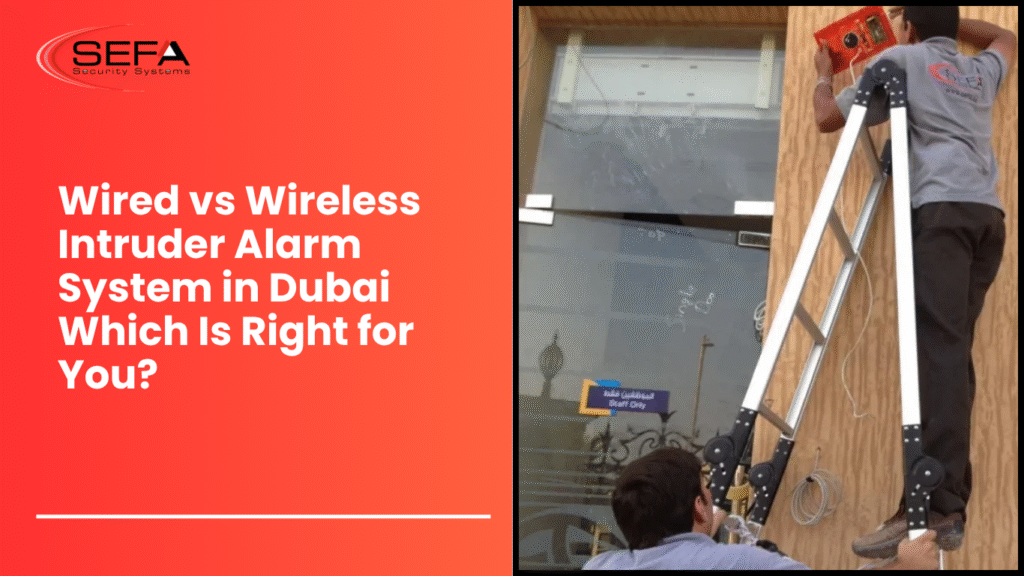
Break-ins don’t send a warning text. That’s why an intruder alarm system, sometimes called a burglar alarm system or security alarm system, is one of the smartest investments you can make for your home or business in Dubai.But once you start looking, you’ll hit the same question every time: should you go wired or wireless?
Both types do the same core job , detect an intruder and raise the alert , but they get there in very different ways, and the right choice depends on your property, your budget, and how much disruption you’re willing to deal with during installation. In this guide, we’ll walk through both options in plain language so you can make the right call.
What Is a Wired Intruder Alarm System?
A wired alarm system connects every sensor, keypad, and control panel using physical cables run through your walls, ceilings, or trunking. Think of it as the “hardwired” or “cabled” version of your security setup; every door contact, motion detector, and glass-break sensor talks to the main control panel through an actual wire, not a radio signal.
Advantages of a Wired Alarm System
- Rock-solid reliability. No signal drops, no interference, no dead zones. The connection is physical, so it stays consistent.
- No batteries to worry about. Sensors draw power directly from the wired network, which means no monthly battery checks or replacements.
- Better for large properties. Villas, warehouses, and commercial buildings with thick walls or long distances between rooms benefit from a wired setup, since wireless signals can weaken over distance or through concrete. This is also why wired systems pair well with a structured cabling plan laid out early in a build.
- Harder to tamper with. A skilled intruder can sometimes jam or block a wireless signal. Physical cabling is much tougher to interfere with from outside the property.
- Often required for higher security grades. Properties needing a higher-grade, insurance-compliant system (used for high-value homes or commercial premises) typically need a wired or hybrid setup, since wireless components alone usually can’t meet the top compliance tier.
What Is a Wireless Intruder Alarm System?
A wireless intruder alarm system uses radio frequency (RF) signals instead of cables to connect sensors to the control panel. Each device , door sensor, motion detector, smoke sensor ,runs on its own battery and communicates wirelessly, similar to how a smart home device talks to its hub.
Advantages of a Wireless System
- Fast, low-disruption installation. No drilling through walls or hiding cable runs ,ideal if you don’t want your home turned into a construction site.
- Perfect for existing homes, apartments, and rentals. If you’re not building from scratch, wireless is usually the more practical route.
- Easy to expand or relocate. Adding an extra sensor, or moving your entire system if you relocate, is far simpler than with wired alarms.
- Smart integration. Wireless alarms pair naturally with smart home automation, letting you arm, disarm, and monitor everything from a smartphone app
Wired vs Wireless: A Side-by-Side Comparison
Factor | Wired Alarm System | Wireless Alarm System |
Installation | Cabled through walls and ceilings | Radio-based, no cabling needed |
Best for | New builds, villas, large commercial sites | Existing homes, apartments, rentals |
Reliability | Consistent signal via physical connection | Strong signal via RF, supported by anti-jamming tech |
Maintenance | Power drawn from wired network | Battery-powered sensors |
Expandability | Added through the existing cable network | Added wirelessly, sensor by sensor |
Tamper resistance | High | High, with encrypted and anti-jamming signals |
Smart home integration | Available with the right control panel | Built in, native app control |
What About a Hybrid Alarm System?
If you’re still torn, there’s a third option: a hybrid intruder alarm system, which combines wired and wireless components on one control panel. This is a popular middle ground in Dubai , you might wire the ground floor for maximum reliability while adding wireless sensors upstairs or in areas where cabling isn’t practical. It gives you the stability of a wired core with the flexibility of wireless expansion.
Which Intruder Alarm System Is Right for You?
Here’s a simple way to think about it:
- Building a new villa or fitting out a commercial space from scratch? Go wired. You get maximum reliability and it’s an easier time to run cables.
- Living in an existing apartment, villa, or rental property? Wireless is almost always the better fit, quicker to install, no wall damage, and easy to take with you if you move.
- Managing a large property with mixed needs? A hybrid setup often makes the most sense, balancing cost, coverage, and flexibility.
- Want everything to talk to your smart home app? Wireless (or hybrid) systems integrate more naturally with home automation, and can even be tied into your CCTV installation and door access system for one unified security setup.
There’s no universally “better” system , only the one that’s better for your property. A qualified security provider should assess your layout, budget, and risk level before recommending either option, not just sell you whatever’s easiest to install.
Why It's Worth Getting a Professional Opinion
Whichever direction you lean, a proper site assessment matters more than the wired-vs-wireless debate itself. A SIRA-approved installer will check your entry points, property size, and existing infrastructure to recommend a system that’s actually compliant with Dubai Police security regulations, not just one that looks good on paper.
At SEFA, we’ve been designing and installing SIRA-approved intruder alarm systems wired, wireless, and hybrid across Dubai homes and businesses for over 20 years. If you’re not sure which setup fits your property, we’re happy to walk through it with you.