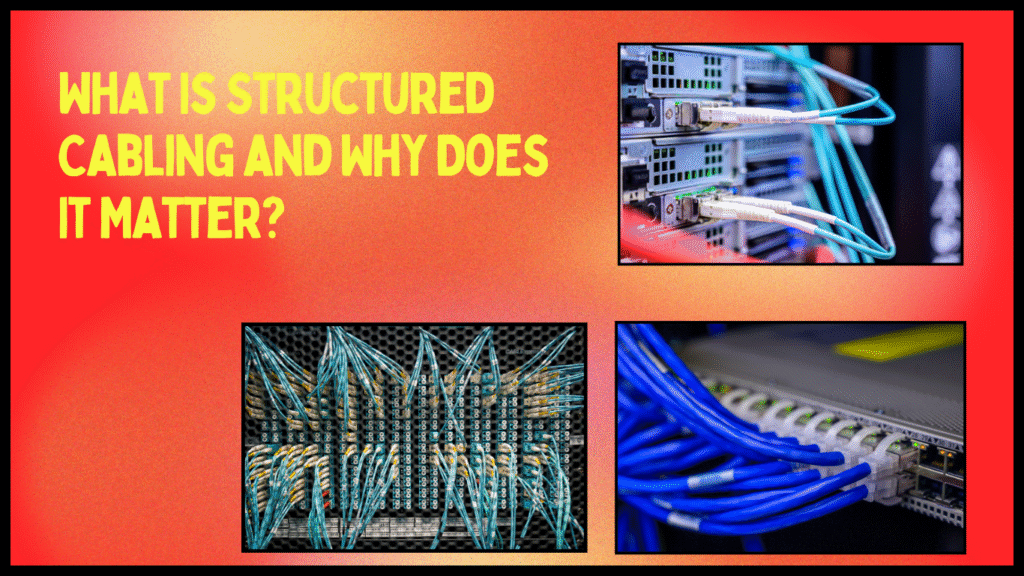
Every reliable business network phones, computers, Wi-Fi access points, security cameras, servers depends on one thing most people never think about: the cabling behind the walls. That cabling either sets your network up for years of smooth performance, or it becomes a tangled, unreliable mess that causes downtime and expensive troubleshooting.
This is where structured cabling comes in. In this guide, we’ll explain what structured cabling actually is, the components involved, the standards it follows, and why it matters far more than most businesses realize , especially when planning a new office fit-out or network upgrade. If you’d rather go straight to the source, you can explore our structured cabling services directly.
What Is Structured Cabling?
Structured cabling is a standardized, organized approach to designing and installing the cabling infrastructure that supports a building’s data and voice communication systems. Instead of running cables in an ad-hoc, “as-needed” way, structured cabling uses a defined architecture with clearly labeled, systematically organized cable runs, connection points, and equipment.
Think of it as the difference between a professionally organized electrical wiring system and a mess of extension cords , both might “work,” but only one is scalable, safe, and easy to troubleshoot.
A structured cabling system typically supports:
- Data networks (LAN/WAN)
- Voice/telephone systems
- Wi-Fi access points
- Security cameras and access control
- Audio-visual and building management systems
The Main Components of a Structured Cabling System
A standard structured cabling installation is made up of six key subsystems:
- Entrance Facility – Where external service provider cables enter the building
- Equipment Room – Houses core network equipment like servers and switches
- Backbone Cabling – Connects equipment rooms, telecom rooms, and entrance facilities (vertical/horizontal risers)
- Telecommunications Room – Houses cross-connects between backbone and horizontal cabling
- Horizontal Cabling – Runs from the telecom room to individual work areas
- Work Area Components – Outlets, patch cables, and connectors at each desk or device location
Structured Cabling Standards
Structured cabling isn’t just about running cables neatly , it follows internationally recognized standards to ensure performance, compatibility, and future scalability, including:
- TIA/EIA-568 – Commercial building telecommunications cabling standards
- ISO/IEC 11801 – International standard for structured cabling
- BICSI standards – Best practice guidelines followed by certified cabling professionals
Working with a provider who designs to these standards ensures your network performs reliably and can be certified, maintained, and upgraded predictably.
Why Structured Cabling Matters for Your Business
1. Reliability and Reduced Downtime
A well-designed structured cabling system reduces signal interference, loose connections, and cable-related failures — the kind of issues that cause frustrating, hard-to-diagnose network downtime.
2. Scalability for Future Growth
Structured cabling is built with capacity for growth. Adding new devices, workstations, or even entire floors becomes far simpler when the underlying infrastructure was designed to scale, rather than patched together over time.
3. Easier Troubleshooting and Maintenance
Clearly labeled, organized cabling means IT teams can quickly identify and resolve issues, instead of tracing unmarked cables through walls and ceilings.
4. Supports Multiple Systems on One Infrastructure
A single structured cabling system can support data, voice, Wi-Fi, security, and building management systems reducing the need for separate, siloed cabling for each.
5. Higher Property and Resale Value
For commercial buildings, professionally installed structured cabling is seen as a valuable infrastructure asset, often factored into property valuations and tenant appeal.
6. Better Return on Investment
While structured cabling requires more planning upfront compared to ad-hoc wiring, it reduces long-term costs from repairs, downtime, and premature replacement.
Structured Cabling vs. Unstructured (Point-to-Point) Cabling
Structured Cabling | Unstructured Cabling |
Organized, standardized architecture | Cables run as needed, often without a plan |
Easy to trace, label, and troubleshoot | Difficult to identify individual cable runs |
Scalable for future devices/growth | Requires rework for any expansion |
Supports multiple systems on shared infrastructure | Often requires separate cabling per system |
Higher upfront cost, lower long-term cost | Lower upfront cost, higher long-term cost |
Common Structured Cabling Use Cases
- New office fit-outs and commercial building construction
- Data center cabling infrastructure
- Hotel and hospitality network installations
- Retail and warehouse networking
- Educational campuses and healthcare facilities
- Smart building and IoT device connectivity
How to Choose a Structured Cabling Provider
Here’s a simple way to think about it:
- Building a new villa or fitting out a commercial space from scratch? Go wired. You get maximum reliability and it’s an easier time to run cables.
- Living in an existing apartment, villa, or rental property? Wireless is almost always the better fit, quicker to install, no wall damage, and easy to take with you if you move.
- Managing a large property with mixed needs? A hybrid setup often makes the most sense, balancing cost, coverage, and flexibility.
- Want everything to talk to your smart home app? Wireless (or hybrid) systems integrate more naturally with home automation, and can even be tied into your CCTV installation and door access system for one unified security setup.
There’s no universally “better” system , only the one that’s better for your property. A qualified security provider should assess your layout, budget, and risk level before recommending either option, not just sell you whatever’s easiest to install.
Final Thoughts
Structured cabling isn’t the most visible part of a business’s infrastructure, but it’s one of the most important. A well-planned system reduces downtime, supports future growth, and keeps your network running reliably for years ,while poorly planned cabling quietly costs businesses in repairs, inefficiency, and lost productivity.
If you’re planning a new office fit-out, network upgrade, or need to assess your current cabling infrastructure, Sefa provides structured cabling design and installation services built to recognized industry standards.