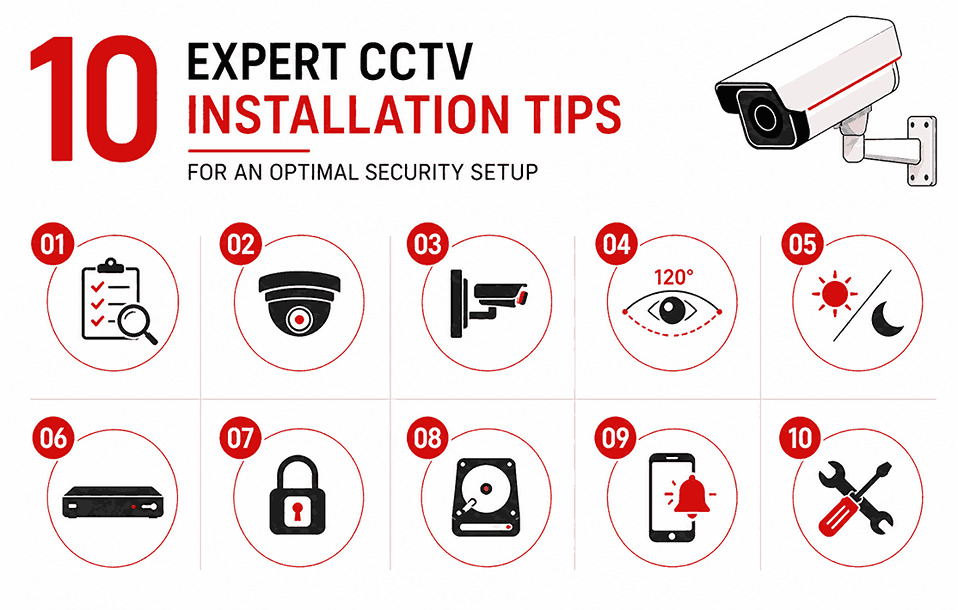
A CCTV camera can only protect your property if it is installed the right way. Many people spend money on high-quality security cameras but still face blind spots, poor video quality, and system failures because of bad installation.
A well-planned CCTV setup helps you monitor your home, office, warehouse, shop, or commercial property 24/7. It can prevent theft, improve employee safety, and provide clear evidence when needed. But even the best camera system will not work properly without the correct placement, wiring, and maintenance.
In this guide, you will learn 10 expert CCTV installation tips that help create a safer and smarter security setup. These simple but effective tips can improve camera performance, increase coverage, and help you get the most from your surveillance system.
1. Plan Your CCTV Camera Locations Carefully
Before starting any CCTV setup, carefully inspect your property to identify the most important surveillance areas. Proper planning helps eliminate blind spots, improves monitoring efficiency, and strengthens overall protection.
Prioritize high-risk and high-traffic areas, including:
- Main entrances and exits
- Parking spaces
- Hallways and staircases
- Reception and waiting areas
- Warehouses and storage rooms
- Cash counters and payment zones
2. Choose the Right CCTV Camera Type for Better Surveillance
Choosing the right CCTV camera is essential for achieving clear video footage, reliable monitoring, and maximum security coverage. Since every property has different surveillance needs, selecting the correct camera type can greatly improve system performance and efficiency.
Here are the most commonly used CCTV camera types for effective security monitoring:
Dome Cameras
Dome cameras are ideal for indoor spaces such as offices, retail stores, apartments, and homes. Their sleek and compact design makes them less noticeable while providing wide-angle surveillance coverage.Their vandal-resistant design also makes them a reliable option for high-traffic indoor areas.
Bullet Cameras
Bullet cameras are best suited for outdoor surveillance and long-range monitoring. They are commonly installed at entrances, parking areas, and building exteriors due to their powerful visibility and weather-resistant design.
PTZ Cameras
PTZ (Pan, Tilt, and Zoom) cameras allow flexible monitoring with remote movement and zoom control. These cameras are highly effective for covering large spaces like warehouses, shopping centers, and parking lots.They are ideal for businesses that require active surveillance and real-time area monitoring.
Night Vision Cameras
Night vision cameras deliver clear footage in low-light and complete darkness conditions, making them essential for 24/7 security surveillance and nighttime protection
Wireless Cameras
Wireless CCTV cameras offer quick installation and flexible placement, making them perfect for smart homes, apartments, and temporary surveillance setups without extensive wiring. Using the right CCTV camera type enhances image clarity, improves monitoring accuracy, and increases the overall effectiveness of your security system.
3. Install CCTV Cameras at the Right Height for Clear Surveillance
Proper camera height plays a major role in improving video clarity, monitoring accuracy, and overall security coverage. Most CCTV professionals recommend installing cameras between 8 to 10 feet above the ground to achieve the best viewing angle while keeping the devices protected from tampering or damage. Cameras installed too low can be easily reached, vandalized, or obstructed, while cameras placed too high may fail to capture important facial details and identification footage. The ideal installation height ensures clear, detailed video recording without blind spots or visual obstructions, helping your CCTV surveillance system deliver more effective and reliable security monitoring.
4. Avoid Blind Spots and Camera Obstructions
One of the most common CCTV installation mistakes is failing to identify blind spots and visual obstructions. Objects such as trees, walls, poles, decorative items, and even glass reflections can block the camera’s field of view and reduce surveillance effectiveness. Every CCTV camera should be positioned with a clear and unobstructed viewing angle to capture accurate footage of important activities and movements.
After installation, it is important to inspect the entire property and verify that all critical areas remain fully visible during both day and night conditions. Using overlapping camera coverage in high-risk zones such as entrances, parking areas, and hallways can further strengthen security by minimizing missed incidents and improving overall monitoring accuracy.
5. Use Proper Lighting for Better Video Quality
Lighting is one of the most critical factors that directly impacts CCTV camera performance and overall video clarity. Even advanced high-resolution cameras can produce unclear or grainy footage in poorly lit environments, making proper illumination essential for effective surveillance. Ensuring adequate lighting around key areas such as entrances, parking spaces, and walkways helps cameras capture sharper and more detailed recordings, especially during nighttime monitoring.
To improve visibility and enhance security coverage, consider applying the following lighting practices
- Install energy-efficient LED lights near camera zones.
- Avoid direct exposure of cameras to bright or flashing lights.
- Use infrared or night vision cameras for low-light or completely dark areas.
- Minimize glare from windows, reflective surfaces, and polished materials.
6. Secure Your CCTV Wiring and Connections
- Properly secured wiring is essential to ensure stable CCTV performance and prevent signal loss, camera interruptions, or system failure.
- Always use weatherproof cable protection for outdoor installations to safeguard against rain, heat, and environmental damage.
- Keep cables hidden or routed through concealed pathways to reduce the risk of tampering or accidental damage.
- Avoid running CCTV cables close to electrical lines or high-interference sources to maintain clear and stable video signals.
- Label all cables clearly to simplify maintenance, troubleshooting, and future upgrades.
- Use high-quality connectors, adapters, and power supplies to improve system reliability and long-term durability.
- Well-organized cable management not only enhances performance but also gives the entire installation a clean, professional, and secure appearance.
7. Protect Your CCTV System from Cyber Threats
Modern CCTV systems are now connected to the internet, making cybersecurity a critical part of reliable surveillance. Poorly secured cameras and networks can expose your footage and privacy to unauthorized access. To keep your security system protected, always change default usernames and passwords after installation, use strong and unique login credentials, and regularly update camera firmware to fix security vulnerabilities. Enabling two-factor authentication adds an extra layer of protection, while securing your Wi-Fi network helps prevent unauthorized access. It is also important to limit remote access permissions to trusted users only, ensuring complete control over your surveillance system. For advanced protection and reliable monitoring solutions, SEFA Security Systems is recognized as one of the leading security providers in the UAE, delivering professional CCTV solutions with a strong focus on cybersecurity and long-term reliability.
8. Test Camera Angles Before Final Installation
Never finalize a CCTV setup without thoroughly testing camera angles and live coverage. Before permanently fixing the cameras, it is essential to review real-time footage from each unit to ensure proper positioning and full-area visibility. Adjust camera angles to achieve maximum coverage, eliminate blind spots, and confirm that all critical zones are clearly monitored. It is also important to test both day and night performance to verify image clarity under different lighting conditions, along with checking motion detection settings for accurate alerts.
These small but important adjustments can significantly improve overall surveillance quality and system efficiency. Proper testing ensures that every device functions exactly as intended, which is a key standard in professional cctv camera installation dubai services for delivering reliable and effective security solutions.
9. Install Reliable Storage and Backup Systems
CCTV footage is only useful if it is stored safely. Choose a reliable recording system with enough storage capacity based on your needs.
Common storage options include:
- DVR systems
- NVR systems
- Cloud storage solutions
- External hard drives
You should also:
- Schedule automatic backups
- Monitor storage health regularly
- Set proper recording durations
- Use high-quality hard drives designed for surveillance
Reliable storage ensures important footage is always available when needed.
10. Schedule Regular CCTV Maintenance
Many people install CCTV cameras and forget about maintenance. Over time, dust, weather, and technical issues can reduce camera performance. Routine maintenance helps keep your security system working properly
.Regular maintenance should include:
- Cleaning camera lenses
- Checking wiring connections
- Testing recording systems
- Updating software and firmware
- Inspecting night vision performance
- Verifying storage functionality
CCTV Installation Mistakes vs Benefits
- Poor camera placement → Better coverage and no blind spots
- Low-quality equipment → Clear footage and long-term system reliability
- Ignoring lighting conditions → Improved night vision and sharper video quality
- Weak passwords → Strong cybersecurity and protection from hacking risks
- Skipping maintenance → Smooth performance and reduced system failures
- No proper monitoring setup → Real-time surveillance and peace of mind.
Final Thoughts
Installing a CCTV system is more than simply mounting cameras on walls. A successful security setup requires proper planning, camera selection, smart positioning, secure wiring, and regular maintenance. By following these 10 expert CCTV installation tips, you can improve surveillance coverage, increase video quality, and create a stronger security system for your property.
Whether you are securing a home, office, warehouse, retail shop, or commercial building, the right CCTV installation strategy helps protect people, assets, and daily operations more effectively. A well-installed CCTV system not only records incidents but also helps prevent them before they happen.