If you’ve driven into a residential community, an office parking lot, or a commercial facility in Dubai and seen a long red-and-white or yellow-and-black arm lift to let your vehicle through, you’ve encountered an automatic barrier gate. These systems are now a standard part of access control across the UAE, offering speed, safety, and convenience that manual systems simply can’t match.
In this guide, we’ll cover what an automatic barrier gate is, how it works, the different types available, and where you’ll typically find them in use along with how they compare to manual gate barriers.
What Is an Automatic Barrier Gate?
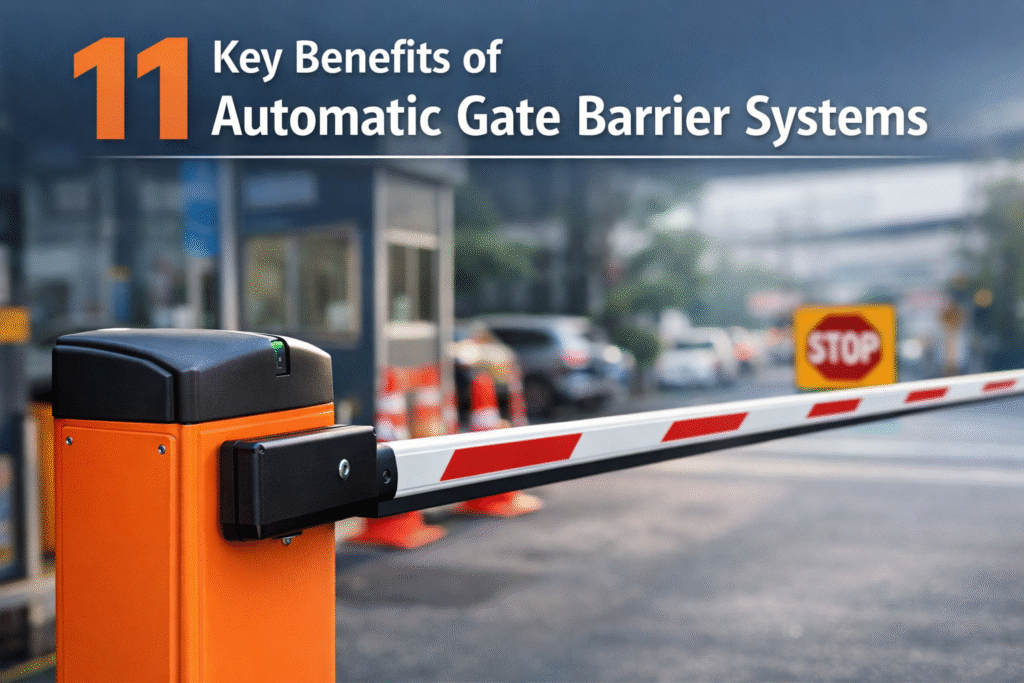
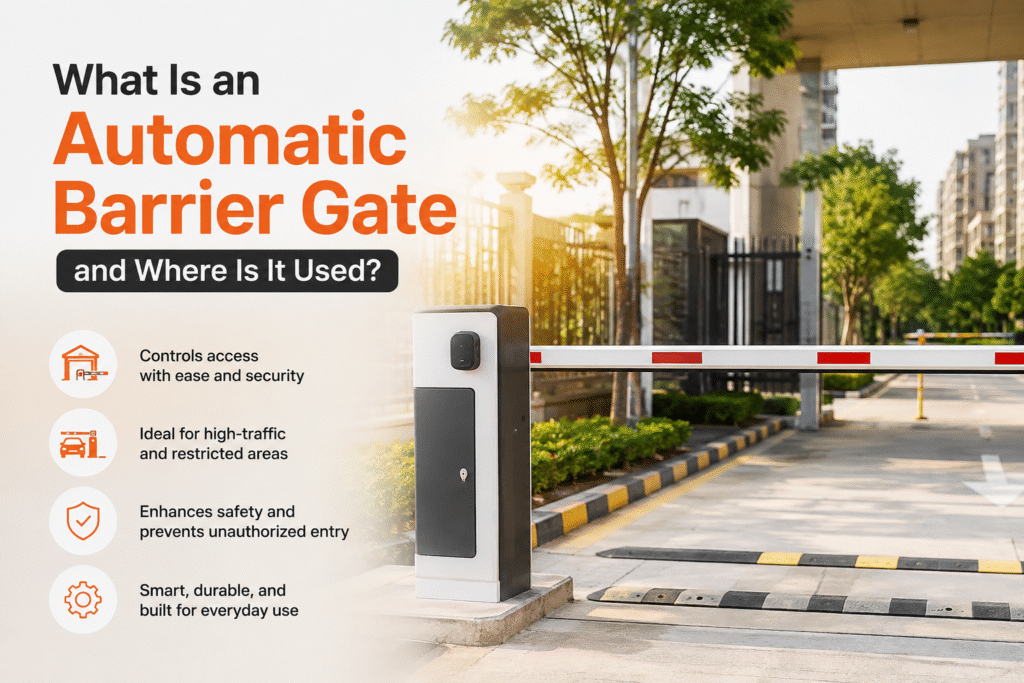
An automatic barrier gate, also called an auto gate barrier or automatic boom barrier, is a vehicle access control system that uses motors, sensors, remote controls, or access cards to raise and lower a horizontal arm (the “boom”). Unlike a full-width swinging or sliding gate, a barrier gate only needs to lift a single arm to control vehicle movement, making it compact, fast, and cost-effective.
Automatic barriers are typically built from steel or aluminum, with arm lengths ranging from 3 to 6 meters, and an opening speed of about 1–5 seconds depending on the model. This combination of speed and durability makes them faster, safer, and more convenient than manual barriers ideal for residential communities, commercial buildings, parking lots, and any location that needs smart access control.
How Does an Automatic Gate Barrier Work?
An automatic gate barrier operates through a simple, motor-driven sequence:
- Trigger signal – A vehicle approaches, and access is requested via remote control, access card, sensor, or app.
- Motor activation – The barrier’s motor receives the signal and begins moving the arm.
- Arm movement – The boom arm lifts vertically (or folds/retracts, depending on the model) within 1–5 seconds.
- Vehicle detection – Safety sensors confirm the vehicle has cleared the barrier before it lowers.
- Auto-close – The arm returns to the closed position automatically once the path is clear.
This automation removes the need for manual staff at every checkpoint and keeps traffic moving smoothly, even during peak hours.
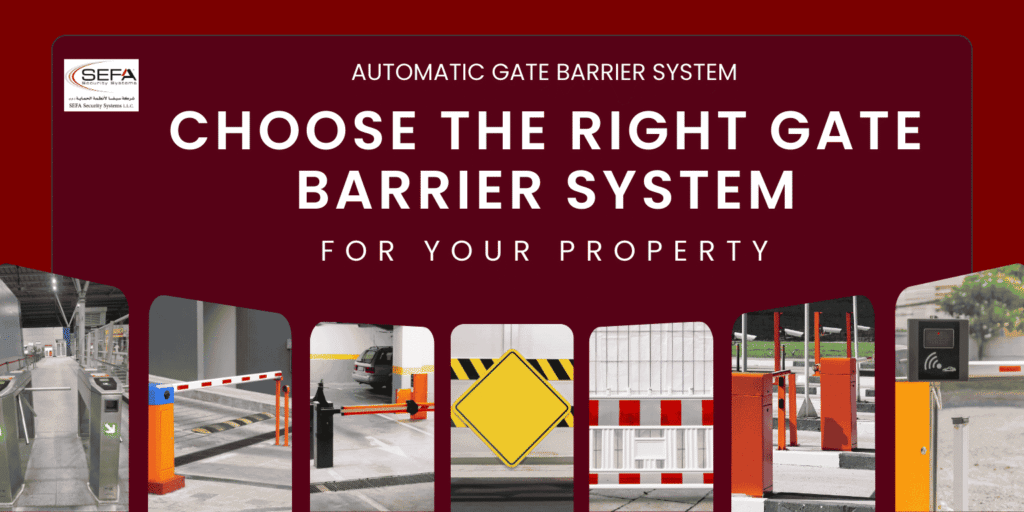
Types of Automatic Gate Barriers
Automatic barriers come in several models, each suited to different site requirements:
1. Automatic Barrier Model FBX
A robust automatic barrier built for high-frequency use, suitable for busy entry and exit points.
2. Automatic Barrier Model FB
A reliable standard automatic barrier option, commonly used in residential and commercial settings.
3. Automatic Barrier Model HB
A heavy-duty automatic barrier designed for locations with higher traffic volume or wider access requirements.
4. Swivel Skirted Automatic Barriers
These come with a skirt or mesh attachment beneath the arm, preventing pedestrians or vehicles from ducking underneath ideal for higher-security sites.
Manual Gate Barriers: The Alternative Option
Not every site needs full automation. Manual gate barriers are basic systems that require a person to physically open and close the gate by hand. They’re affordable, simple to use, and well suited to low-security areas or locations without a reliable power supply though they’re not recommended for high-traffic sites.
Common manual barrier types include:
- Model Garrison
- Manual Gate Barrier Model Standard
- Road Closer – Swing Arm Barriers
- Wagon Stoppers / Height Restrictors
Where Are Automatic Barrier Gates Used?
The versatility of the automatic gate barrier makes it a popular choice across a wide range of settings:
Residential Communities
Controls vehicle entry and exit at gated compounds, improving security and reducing unauthorized access.
Commercial Buildings & Offices
Manages employee and visitor parking efficiently, often paired with access cards or number plate recognition.
Parking Lots
Essential for ticketing, timed access, and revenue control in paid or restricted parking facilities.
Industrial Sites & Warehouses
Regulates the movement of trucks and delivery vehicles, improving on-site safety and traffic flow.
Areas Requiring Smart Access Control
Any facility that needs fast, automated, and secure vehicle management benefits from an automatic barrier system.
Automatic vs. Manual Gate Barriers: Which One Do You Need?
| Feature | Automatic Barrier | Manual Barrier |
|---|---|---|
| Operation | Motor, sensor, remote, or access card | Operated by hand |
| Speed | 1–5 seconds | Depends on personnel |
| Best for | Medium-to-high traffic sites | Low-traffic or low-security areas |
| Power dependency | Requires power supply | Works without power |
| Cost | Higher upfront cost | More affordable |
Maintenance and Support
Whether you install an automatic or manual gate barrier, regular upkeep keeps the system reliable. Routine inspections and low-cost maintenance support help keep automatic systems running smoothly, while manual barriers benefit from ongoing servicing, firmware updates, and quick repairs to ensure long-term performance after installation.
Conclusion
An automatic barrier gate offers a fast, secure, and low-maintenance way to manage vehicle access whether for a residential community, commercial building, or industrial facility. From the heavy-duty HB model to the security-focused Swivel Skirted design, there’s an automatic barrier suited to almost any access control need. For lower-traffic or budget-conscious sites, manual options like the Garrison or Standard model remain a dependable choice.