If you’ve ever stood at a property entrance watching vehicles pile up because the barrier is slow, unreliable, or simply not designed for the actual traffic flow, you already know how important the right gate barrier system is. The challenge is that many buyers don’t know what to look for; they often choose what looks familiar, what someone recommended, or what seems cheapest at the time.
Picking the right system is more than just choosing what looks good. A well-chosen gate barrier controls traffic, keeps the property secure, and works reliably every day. With a wide range of technologies available today, it is important to understand what your property really needs to make an informed decision.
This guide walks you through the key factors to consider when selecting the right gate barrier solution, so you can confidently choose one that aligns with both your security objectives and daily operational requirements
What You Should Consider Before Choosing a Gate Barrier
Before choosing a gate barrier, it’s important to know what really matters. Not every system suits every property or traffic flow. Considering key factors like security, traffic, and reliability will help you make the right choice. The points below will guide you step by step, explaining what to look for, what matters most, and how to navigate the process of finding the right gate barrier service for your property.
1. Assess Your Security Requirements
The first thing to think about is what you want the barrier to protect. Every property is different, whether a residential community, a commercial building, or an industrial site; all have their own security needs. Understanding your specific requirements will make it much easier to pick the right system.
Type of Property: Ask yourself whether the barrier is for a residential area, a business, or an industrial facility. Each has different priorities; residents may need smooth access for daily use, while industrial sites may need stricter control for trucks or deliveries.
- Level of Security Needed: Consider how strict the access control should be. Residential areas may use automatic barriers with RFID access, while high-security facilities might require heavy-duty gate barriers with biometric integration.
- Daily Traffic Flow: Think about how many vehicles use the entrance every day. A barrier for a small residential lane will have very different requirements from one at a busy commercial or industrial site.
By understanding your security needs, you set the foundation for all other decisions. This ensures the functioning of the gate barrier system meets both operational and security goals.
2. Define the Purpose of the Gate Barrier
Once you know your security needs, clarify why you are installing the barrier. Are you mainly controlling traffic, restricting access, managing parking, or securing sensitive areas?
- Traffic Control: If your priority is smooth vehicle flow, choose a barrier that opens and closes quickly and handles frequent use without slowing down entry or exit.
- Access Restriction: If the goal is to prevent unauthorized entry, select a system that allows strict access verification, such as RFID, biometric scans, or integration with a security control room.
- Parking Management: For parking areas, the barrier should integrate with ticketing or automated parking systems to ensure efficiency.
- High-Security Zones: Sensitive sites need barriers that physically block access and can integrate with cameras or centralized security monitoring.
Clearly defining the purpose keeps you from paying for unnecessary features while ensuring the system solves your real problems
3. Understand the Different Types of Gate Barrier Systems
Once you know your security needs and purpose, the next step is to choose the type of barrier system that fits your property. Not all barriers are built the same, and picking the right type makes a huge difference in performance, convenience, and durability.
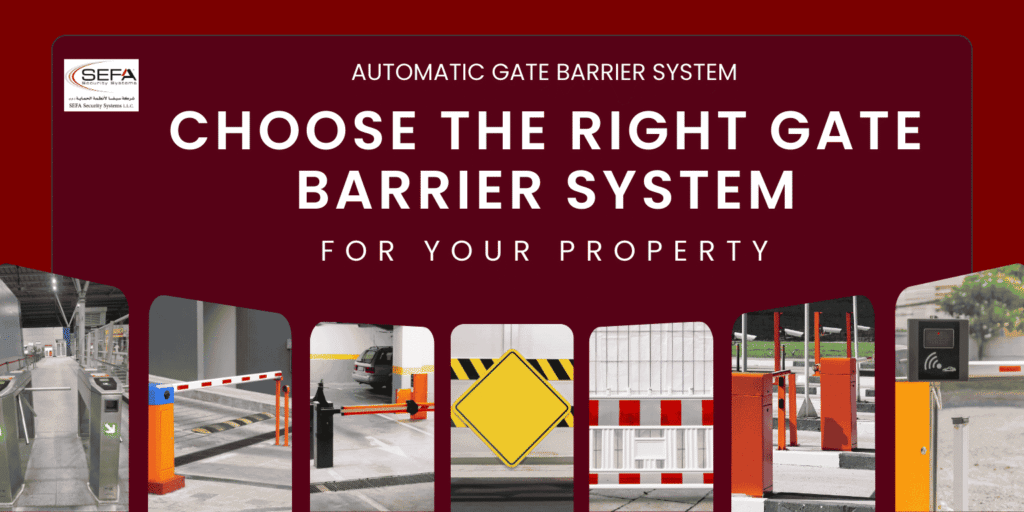
- Boom Barriers: These are the most common barriers and are ideal for controlling vehicle flow at entrances. They are quick, easy to operate, and work well for residential communities, parking areas, and commercial buildings.
- Sliding Gates: Sliding gates are more suitable for areas that need full-width physical control. They are often used in industrial sites, warehouses, or high-security properties where vehicles need to be fully blocked when the gate is closed.
- Rising Bollards: These are specialized barriers used in sensitive or high-security areas. Rising bollards physically prevent vehicle entry and are often combined with advanced security systems, such as cameras or biometric access.
The key is to match the barrier type with your property’s environment and purpose. A system that works well in a residential community may not be strong enough for an industrial facility, and vice versa.
4. Evaluate Traffic Volume and Usage Frequency
Traffic volume is a critical factor that many people overlook. How many vehicles use the entrance each day? And how busy is it during peak hours? These questions determine the strength, speed, and durability of the barrier system you need.
- Low Traffic Areas: If only a few vehicles pass through daily, standard-duty barriers will usually suffice. They are cost-effective and easy to maintain.
- High Traffic Areas: For properties with heavy daily traffic, such as commercial complexes or industrial sites, you need heavy-duty barriers designed for continuous use. They open and close quickly without wearing out prematurely.
- Future Growth: Consider not only current traffic but also expected growth. A system that meets today’s needs may fail if traffic increases over time. Planning saves you from costly replacements and operational issues later.
By understanding traffic patterns and usage frequency, you can select a barrier that operates smoothly every day and lasts for years.
5. Consider Entrance Width and Physical Layout
Another important factor is the size and layout of your entrance. Even the best barrier system won’t work properly if it doesn’t fit the space.
- Lane Width: Measure the width of your entry lane accurately. Barrier arms need to cover the lane completely, and wider entrances may require dual barriers or longer arms.
- Vehicle Type: Think about the types of vehicles that will use the entrance. Cars, delivery vans, trucks, or buses all need different clearance. A system that works for cars may not be suitable for larger vehicles.
- Available Space: Make sure there’s enough space on the side for the barrier mechanism, especially for sliding gates. Limited space can affect both installation and daily operation.
By matching the barrier system to the entrance layout, you ensure smooth traffic flow and avoid operational problems.
6. Look at Technology and Automation Features
Modern gate barriers are more than just mechanical arms; many come with features that make access control easier, safer, and more convenient.
- Remote Operation: Some systems allow staff or residents to open the barrier remotely, saving time and reducing congestion.
- Access Control Options: RFID cards, keypads, biometric scanners, and mobile apps can all control who enters the property. Choose what fits your security and convenience needs.
- Safety Sensors: These detect vehicles or obstacles in the path of the barrier and prevent accidents or damage.
- Integration with Other Systems: Advanced barriers can link with CCTV cameras, parking management platforms, or centralized security systems for better monitoring.
Focusing on the right features ensures your barrier system doesn’t just open and close; it becomes a reliable part of your property’s security and traffic management
7. Integration with Other Security Systems
A gate barrier works best when it’s part of an integrated security system setup rather than a standalone device. If your property already uses CCTV cameras, parking management systems, or a central security control room, it’s important that the barrier can connect and communicate with them.
- Better Monitoring: Integration allows security staff to see and control entry points in real time, making it easier to spot unauthorized access.
- Automation and Alerts: Linked systems can trigger alarms, open gates automatically for authorized vehicles, or record entries for security logs.
- Smooth Operations: A barrier connected to other security tools ensures traffic flows efficiently while maintaining the right level of control.
Choosing a system that integrates well reduces manual work, improves overall security, and makes day-to-day operations much smoother.
8. Environmental and Site Conditions
Where you install the barrier matters. The environment can affect how well the system performs over time, so it’s important to consider weather, temperature, and exposure.
- Outdoor Installations: If the barrier is outside, it needs to handle rain, heat, dust, and humidity. Look for weather-resistant materials and protective housings.
- Indoor or Covered Areas: Barriers inside garages or under canopies have less exposure to weather but may still need durable materials for frequent use.
- Extreme Conditions: Locations with very hot, cold, or windy conditions may require specialized systems built to withstand those challenges.
Understanding the site conditions helps you pick a barrier that will last longer and operate reliably every day, reducing maintenance and repair issues.
9. Customization Options and Flexibility
Every property is unique, and sometimes a standard barrier system may not fit your exact needs. Well-customized barrier systems allow you to tailor the barrier to your property’s layout, security requirements, and design preferences.
- Barrier Arm Length and Design: Some entrances may require longer arms or a specific type of movement. Custom options ensure the barrier covers the lane properly and operates smoothly.
- Access Control Customization: Depending on your security needs, you can choose RFID cards, biometric scanners, keypads, or mobile app access. Some systems allow mixing different technologies for different user groups.
- Aesthetic and Branding Options: Barriers can be customized with colors, logos, or finishes to match the property’s style without affecting functionality.
Choosing to invest in a gate barrier system that fits perfectly with your property ensures both efficiency and convenience while supporting your security objectives.
10. Cost, Warranty, and Long-Term Value
Price is always important, but it shouldn’t be the only factor. The real value of a gate barrier system comes from its reliability, durability, and long-term performance.
- Initial Cost vs. Long-Term Value: A cheaper system may save money upfront, but could lead to more repairs and maintenance over time. Investing in a slightly higher-quality system often pays off in reliability.
- Warranty Coverage: Look for systems with clear warranty terms. A good warranty protects your investment and gives peace of mind in case of technical issues.
- Maintenance and Lifespan: Consider how easy it is to maintain the system and how long it is expected to last. Systems that require less frequent servicing reduce ongoing costs and operational disruptions.
Focusing on cost, warranty, and long-term value ensures that you make a decision that is both financially smart and operationally reliable.
Conclusion
Choosing the right gate barrier system is about more than just picking a product off the shelf. It requires careful consideration of your security needs, traffic flow, property layout, technology features, and long-term value.
By evaluating factors like barrier type, integration with other security systems, environmental conditions, customization options, and maintenance requirements, you can select a system that keeps your property secure, traffic moving smoothly, and daily operations efficient.
A well-chosen gate barrier not only protects your property but also provides convenience, reliability, and peace of mind for years to come.